
Listen.

Explore more on this subject
-
 Is Moshiach Jewish?
 22:25Do Jews believe in the Messiah? Is the messianic age mentioned in the Torah?
 -
 Love That Never Ends
46:27Discover the hidden truth about the misunderstood concept of love with this profound teaching. Gain wisdom from Jewish scripture and Chasidic insight to transform superficial relationships into eternal bonds of unconditional intimacy. Learn to cultivate selfless bonds free from judgement—in marriage, family, friendship, and even your connection to the divine. Find fulfillment through the secrets of genuine union, revealed.
Love That Never Ends
46:27Discover the hidden truth about the misunderstood concept of love with this profound teaching. Gain wisdom from Jewish scripture and Chasidic insight to transform superficial relationships into eternal bonds of unconditional intimacy. Learn to cultivate selfless bonds free from judgement—in marriage, family, friendship, and even your connection to the divine. Find fulfillment through the secrets of genuine union, revealed. -
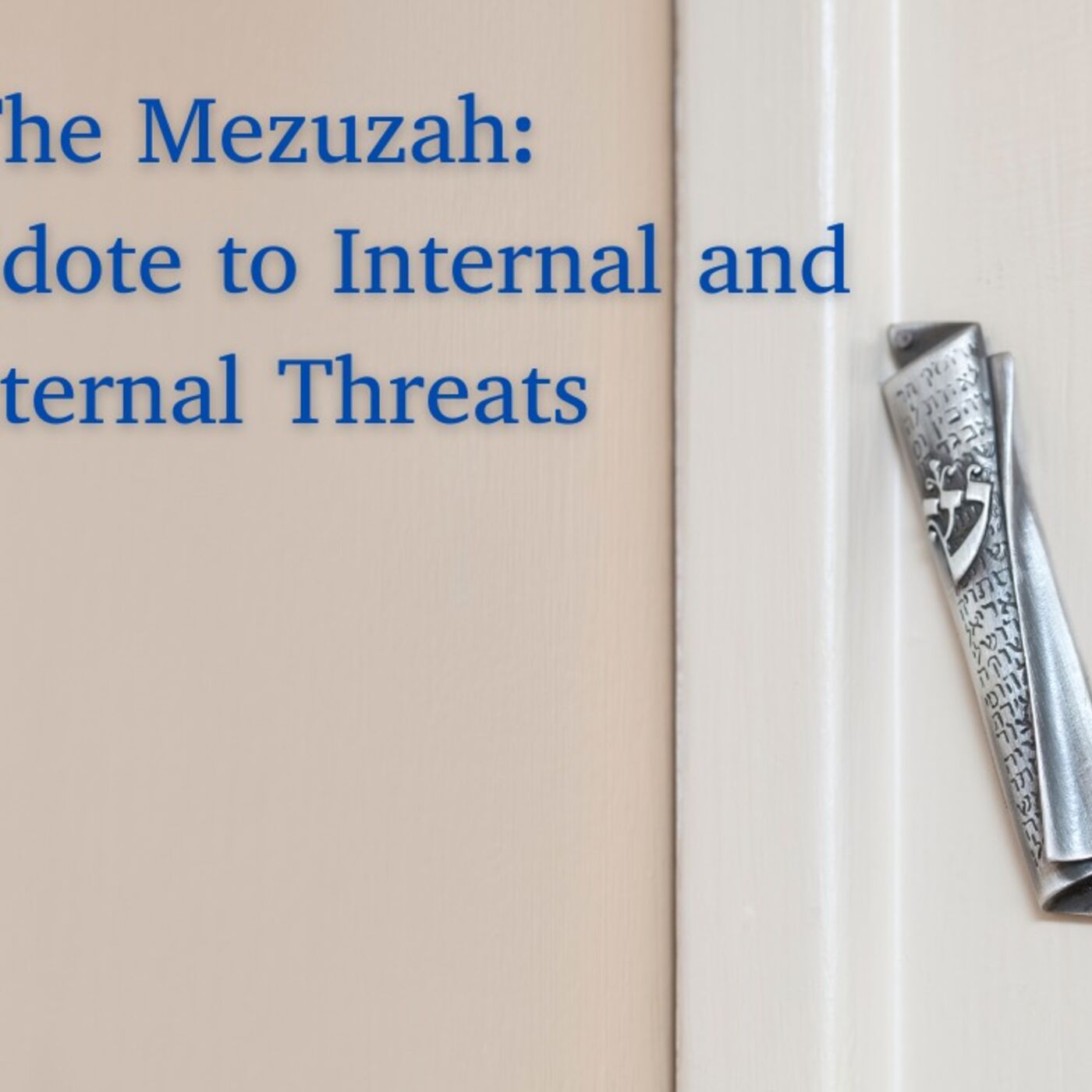 The Mezuzah: The Antidote to Internal and External Threats
10:54The Mezuzah: The Antidote to Internal and External Threats Parsha Chukas
The Mezuzah: The Antidote to Internal and External Threats
10:54The Mezuzah: The Antidote to Internal and External Threats Parsha Chukas -
 Just One “How are you?” Can Save the World
03:22We sell ourselves short by underestimating the power of our words and actions. Your one good deed can tip the scale and turn the world over for the good!
Just One “How are you?” Can Save the World
03:22We sell ourselves short by underestimating the power of our words and actions. Your one good deed can tip the scale and turn the world over for the good! -
 Inviting G-d Into Our Home
03:59The Talmud teaches that when a person provides shelter for someone in need, they become partners with G-d in creating humanity, for a home gives a person their identity. Join Rabbi Greenberg as he discusses how every mitzvah we do gives G-d the ability to fulfill the purpose of creation. For G-d, too, is in need of a home.
Inviting G-d Into Our Home
03:59The Talmud teaches that when a person provides shelter for someone in need, they become partners with G-d in creating humanity, for a home gives a person their identity. Join Rabbi Greenberg as he discusses how every mitzvah we do gives G-d the ability to fulfill the purpose of creation. For G-d, too, is in need of a home.